
Symphony 101
Welcome to the Okanagan Symphony! Whether this is your first time attending a performance and you’re curious about what to expect, or you’ve been before and would like to learn more, we’re so glad you’re here. Symphony 101 is your guide to making the most of your OSO experience—from what to wear and when to applaud, to understanding more about the orchestra.
What to know before you go
What should I wear?
Wear whatever makes you feel comfortable and confident! From jeans and tees to business casual to “dressed to the nines,” at an OSO concert you will see it all. Make it a special night out or keep it casual — you are most welcome either way.
We kindly ask that you avoid scented personal products. Strong fragrances can affect those with sensitivities or allergies.
When should I arrive at the venue?
We recommend arriving 30 minutes or more before the concert begins so you can pick up your tickets at the Box Office (if needed), grab a refreshment, use the washrooms, socialize, and find your seat. This way, you’ll also have time to absorb the atmosphere, glance through the concert program and turn off your devices.
If you are interested in learning more about the performance, arrive an hour before the concert and listen to an intimate and informative pre-concert chat by the conductor.
What if I’m running late?
OSO concerts begin right on time, and late arrivals may need to wait in the lobby until there’s a suitable pause in the music. The theatre ushers will guide you into the auditorium when it won’t disrupt the performance.
I’m at the show—what should I know?
How long is a concert?
Concert lengths vary depending on the program, but most OSO performances run between 2 and 2.5 hours. Unlike other types of concerts, a symphony concert protocol is to remain seated in the auditorium until intermission or the final note. Most OSO concerts have a 20–25-minute intermission. This is your opportunity to get up if you need to.
When should I clap?
At the start of the concert, applause is customary when the concertmaster, the conductor and any guest soloists enter the stage.
Once the music begins if it moves you, feel free to show your appreciation! While classical tradition suggests waiting until the end of a full piece before clapping (not between movements), this custom is becoming more relaxed. If you’re unsure when to applaud, a helpful tip is to watch the conductor: when they lower their baton, that’s your cue.
Can I take pictures or videos?
You are welcome to take photos as long as your camera or phone is on silent and you don’t use flash. Please be mindful of those around you, e.g. by dimming your brightly lit screen. Video and audio recordings however are not allowed—this protects the artistic work of our performers. And don’t forget to silence any other devices that could make noise.
I’m at the show—what should I know?
How long is a concert?
Concert lengths vary depending on the program, but most OSO performances run between 2 and 2.5 hours. Unlike other types of concerts, a symphony concert protocol is to remain seated in the auditorium until intermission or the final note. Most OSO concerts have a 20–25-minute intermission. This is your opportunity to get up if you need to.
When should I clap?
At the start of the concert, applause is customary when the concertmaster, the conductor and any guest soloists enter the stage.
Once the music begins if it moves you, feel free to show your appreciation! While classical tradition suggests waiting until the end of a full piece before clapping (not between movements), this custom is becoming more relaxed. If you’re unsure when to applaud, a helpful tip is to watch the conductor: when they lower their baton, that’s your cue.
Can I take pictures or videos?
You are welcome to take photos as long as your camera or phone is on silent and you don’t use flash. Please be mindful of those around you, e.g. by dimming your brightly lit screen. Video and audio recordings however are not allowed—this protects the artistic work of our performers. And don’t forget to silence any other devices that could make noise.
Find your seat & settle in
Why are musicians playing before the concert starts?
Just like athletes before a big game, musicians need to warm up their fingers and lungs and focus their minds. You might hear them practicing tricky passages or tuning up—it’s all part of getting ready to give you their best performance!
Why do musicians wear similar clothing?
There are two reasons the musicians dress in a similar manner. First, because we don’t want anything to distract from your focus on the music. Second, the orchestra is a single entity, an ensemble rather than a group of individuals. A cohesive look in dress helps to reinforce that concept.
Why are there so many string instruments?
A violin on its own may not make as much sound as, say, a trumpet. But put many together and they create a rich, full sound that blends beautifully with the rest of the orchestra. That’s why you’ll see more violins, violas, cellos, and double basses than other instruments.
I’m curious to know . . .
What is a concertmaster and what do they do?
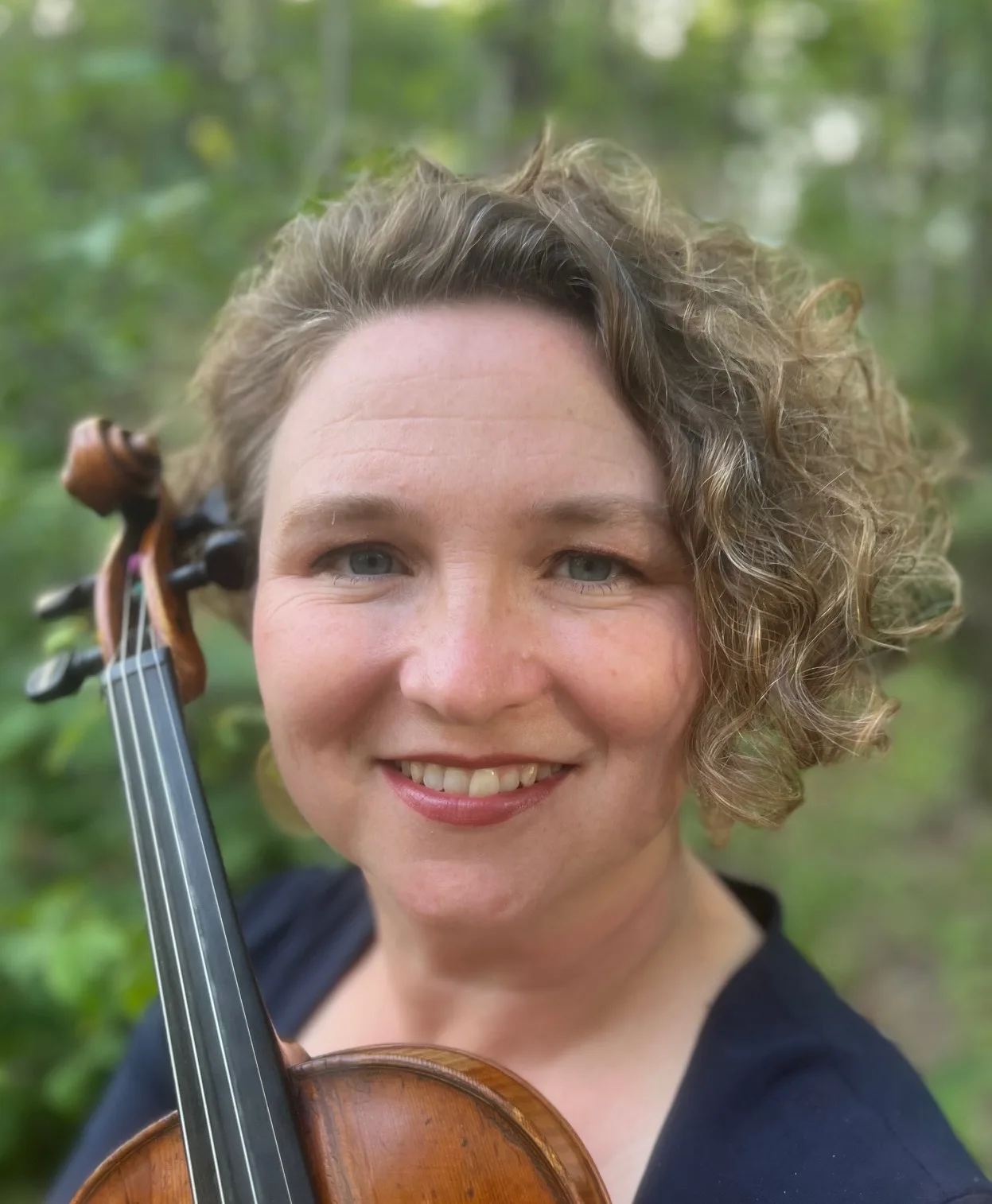
The concertmaster is the lead violinist who sits in the front row, closest to the audience. They help guide the string section and play a key leadership role in the orchestra. You’ll notice they’re the last to enter the stage—and they cue the oboe to begin the official tuning.
Learn more about our concertmaster, Rachel Kristenson, here.
Why does the orchestra tune to the oboe?
The oboe’s clear, steady sound stands out and is easy for everyone to hear and match. It has a long tradition of being the go-to instrument for setting pitch. It is also less affected by temperature and humidity changes, while some other instruments need regular retuning, sometimes even in between pieces or movements.
Why don’t musicians smile while they play?
Some do! But like athletes in a game, most are deeply focused and “in the zone,” fully immersed in the music. After the performance, you’ll often see big smiles—and if they loved a soloist’s performance, string players might even tap their bows on their stands as a sign of appreciation!
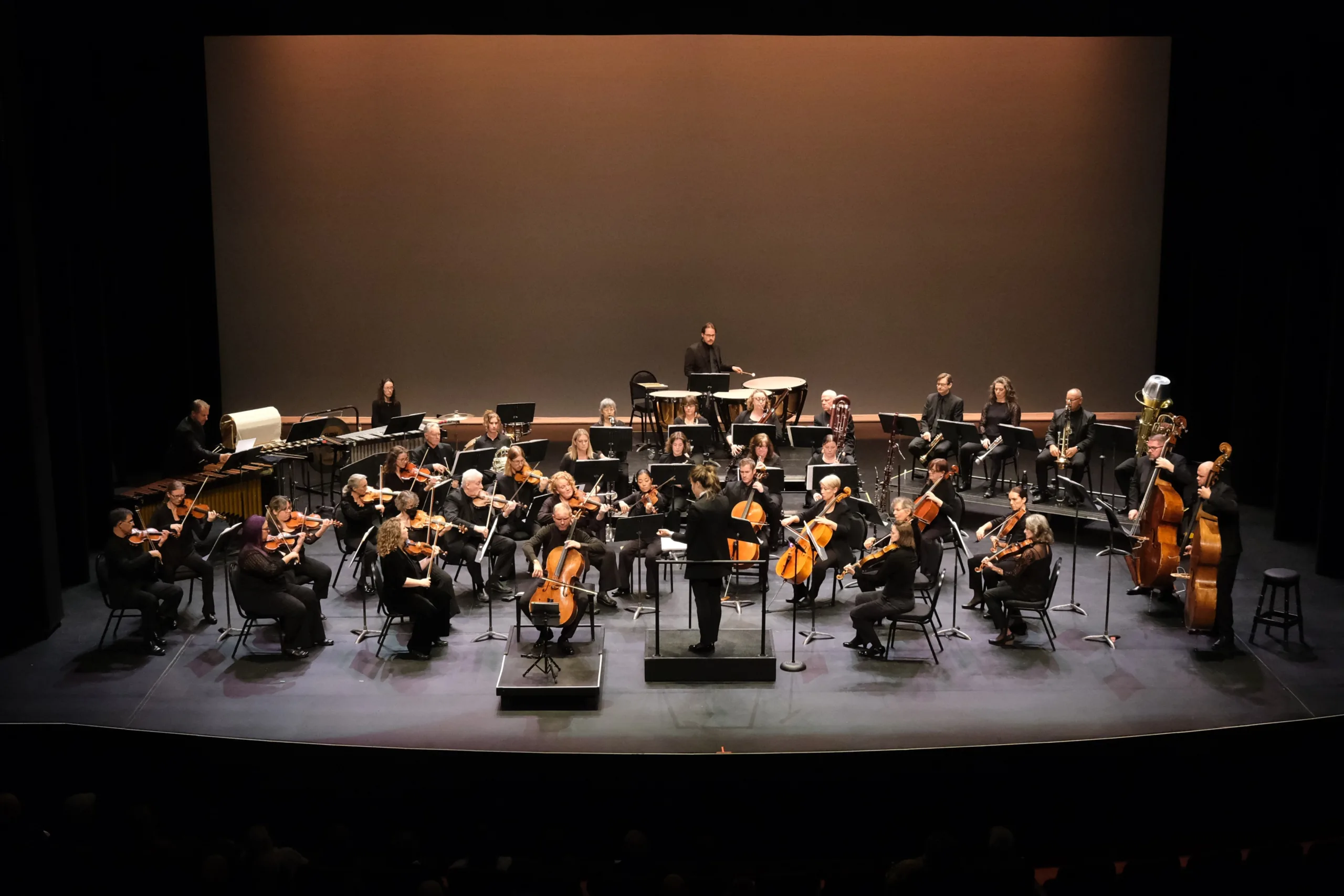
What am I seeing on the stage?
The OSO is typical of most orchestras: It’s a large group of musicians working together to create beautiful, powerful music. It’s made up of four main families of instruments.
Strings
This is the largest section, sitting in a semicircle at the front of the stage. It includes violins (the smallest and highest in pitch), violas, cellos, and double basses (the largest and lowest). Strings form the heart of the orchestra’s sound.
Woodwinds
These include flutes, oboes, clarinets, and bassoons. Woodwind players sit just behind the strings, and their instruments add color, warmth, and character to the music.
Brass
Trumpets, horns, trombones, and tubas make up the brass section. These instruments are bold and powerful, so they’re placed at the back of the orchestra to balance the sound.
Percussion
This section includes drums, cymbals, and other instruments that are struck, plucked, or shaken—like the timpani, harp, and sometimes the piano. Percussion adds rhythm, drama, and sparkle to the music and is typically located at the rear of the stage.
Photos courtesy of Tourism Kelowna — Kirsten Taylor and Okanagan Symphony