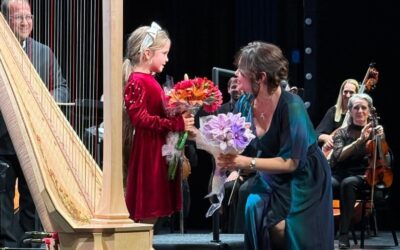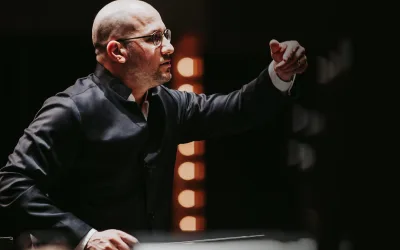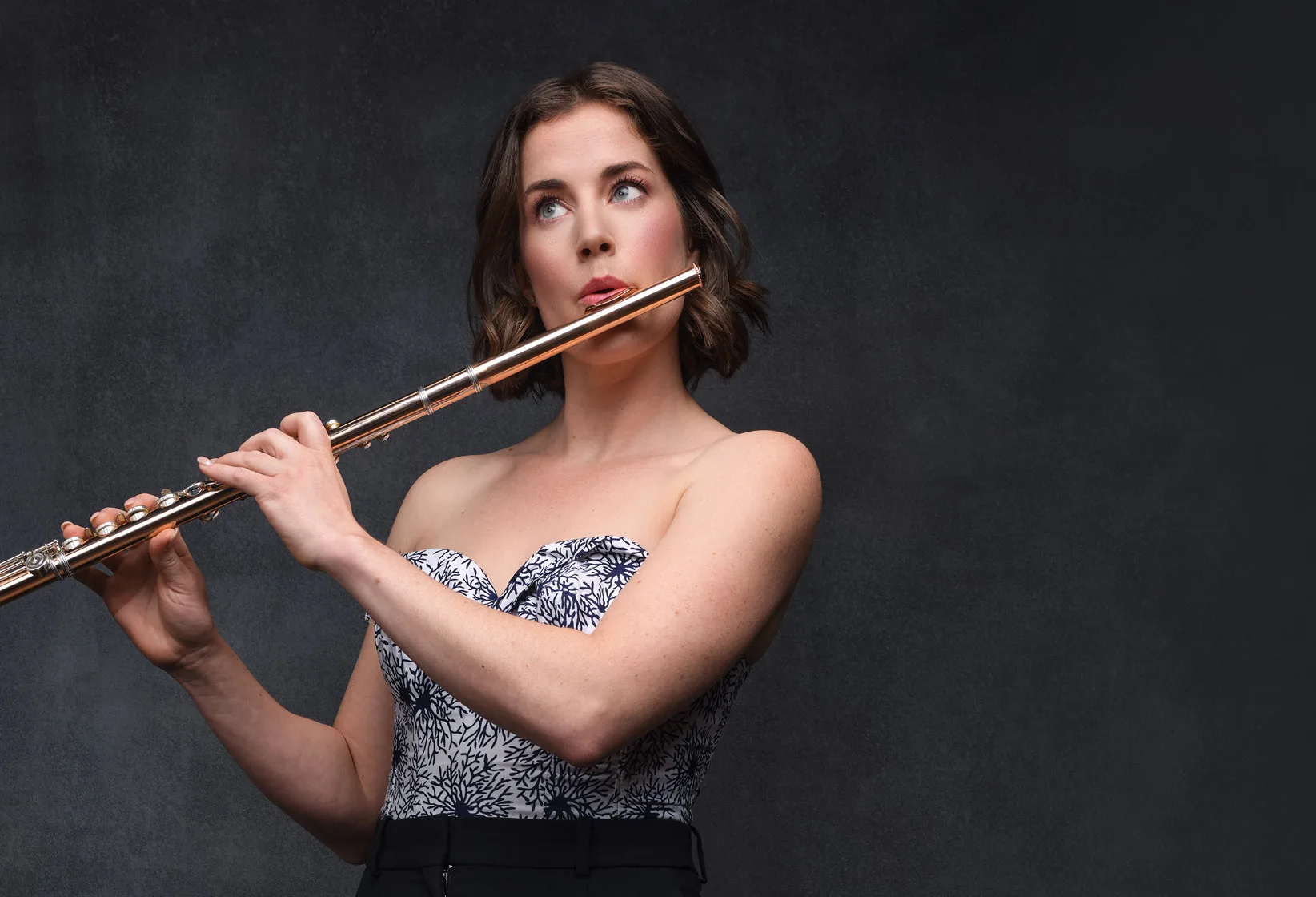
The Okanagan Symphony Orchestra’s “Surprise!” concert lived up to its name in all the best ways. Even before a note was played, the energy in the packed house was infectious. Julian Pellicano, the OSO’s new conductor and music director, set the tone right away. With a background in philosophy and percussion, he brings a storyteller’s flair to the podium, introducing each piece with vivid, approachable anecdotes that made even a classical novice like me feel welcome. One detail that stood out immediately was the unusual stage setup: only two chairs, eight music stands, a harpsichord, and the conductor’s podium. The concert opened with Heinrich Biber’s “Battalia à 10. Pellicano’s preamble helped us follow the music’s storyline telling us the sequence of a battle. The soldiers’ preparations, the drunken pub songs (all in clashing keys), with a stunning violin solo by Susan Schaffer creating the chaos of battle, and the melancholy aftermath. The highlight came when the cellists mimed a musket duel, plucking their strings to imitate gunfire, holding their cellos like muskets as a clever theatrical touch that drew delighted laughter from the crowd. As the violins slid into a mournful glissando, it was clear we were in for a musical meal of surprises. This amuse-bouche whet my whistle for more. As the rest of the orchestra took their seats for the next piece, I found myself noticing again the unusual stage arrangement. The double basses were nestled stage right in the second row, between the violins and French horns, while the timpani at the back row sat just left of centre instead of its usual spot at the back right. Regulars assured me this was all about getting the best possible sound. I later learned this baroque-inspired layout was a thoughtful detail for the Bach piece yet to come. The second piece, Christoph Willibald Gluck’s Finale from the ballet Don Juan, was a whirlwind! Before Pellicano raised his baton, he set the scene: Don Juan cast into hell, violins called upon to conjure the chaos and fury of damnation. The players’ right arms became a blur with tremolo like bowing that demanded relentless energy, their left hands scampering up and down the fingerboard in feverish scales. The effect was both demonic and thrilling, and you could feel the tension ripple through the audience as the violins seemed to battle for their very souls. If Biber’s Battalia was the amuse-bouche, Gluck’s Don Juan was the spicy cocktail, I was begging for after that piece, intense, dramatic, and a little dangerous. Then came the highlight of the first half: Carl Philipp Emanuel Bach’s Flute Concerto in D minor, featuring Heather Beaty. The anticipation in the room was palpable as Beaty took the stage, radiant in a rose-patterned halter dress allowing her pale arms and shoulders be the backdrop to the flute and allow her artistry to shine. Her performance was wonderful, keeping me smiling through the whole piece. With no sheet music in front of her, she seemed confident in knowing this piece and while she let her body move in sweeping gestures it anchored the shape and curves of the music delivered with poise and control. There was a quiet intensity to her playing—a focus that spoke of countless hours of rehearsal, yet Beaty made the work feel effortless. The orchestra ebbed and flowed around her, giving her space to breathe and soar. By the end, the audience was left hungry for more, a perfect palate cleanser before the second half.
After intermission, the concert opened with a modern piece by Caroline Shaw titled Entr’acte, composed in 2011 and revised in 2014. Inspired by the playful spirit and surprising twists of Haydn’s classical string quartets, Shaw’s work begins with a simple, almost classical opening, but quickly ventures into unexpected terrain. Harmonies shimmer with delicate pizzicato, sudden silences punctuate the texture, and folk-like melodies weave through screeches that verge on the industrial. These techniques create rich harmonic layers and the high-pitched violin overlays float above bass notes that seem to breathe, drawing in air much like the gasp one might have at a surprise. Maestro Pellicano describes Shaw’s approach as an epiphany, a fresh reimagining of what a string quartet can be. The intense interplay between instruments, featuring cello solos and sudden shifts from loud to soft, invites listeners to reconsider the boundaries of classical music.
The concert’s grand finale was Franz Joseph Haydn’s Symphony No. 94, famously known as the “Surprise.” The entire evening’s theme came full circle here, and the title made perfect sense. Against a rich blue backdrop and the orchestra dressed in classic black, Haydn’s humor and charm filled the hall like a perfectly crafted main course. The symphony opened gently with the Adagio followed with spirited bounce, awakening the senses and preparing us for the famous Andante, where Haydn’s wit truly shines. That sudden, sharp “surprise” of a jarring, balloon-popping chord, caught me and my neighbors off guard, a playful jolting twist and perhaps a reminder that Haydn loved to keep audiences on their toes.
The Menuetto felt moving as the music swelled between minor-key shadows, what I scribbled as “minor doom notes”, and lighter, floral melodies blooming like fresh herbs on the tongue. Bold crescendos swelled with robust glory enveloping the listener in warmth and anticipation. Finally, the energetic Finale was the satisfying dessert: bright, lively, and full of zest. It brought resolution with a flourish, the last sweet bite that lingers just long enough to leave you content but with a heightened peak of what’s next on the series menu, because you want more. By this point, I put my pen down, choosing instead to savor the full flavor of Haydn’s musical banquet and a sense of content from a concert full of surprises.