Reviewed by Neville Bowman
Time is vital and precious. There is never enough time and so many things we use are designed to both cram as much in as possible, and then ironically waste all that time we gained. When presenting anything in the modern era, those first few seconds are vital, your audience must be yanked in, not just pulled gently. Bounding out energetically, jumping onto a platform and immediately launching into an overture, wasting no time, is an effective way to achieve that.
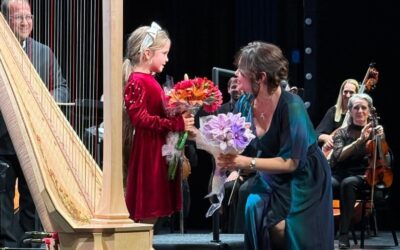
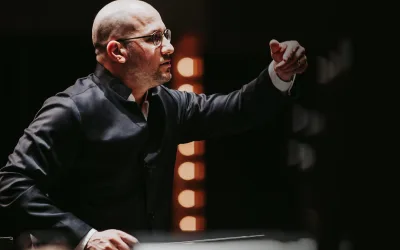
That is exactly what guest conductor Maria Fuller did with the OSO at their season opening concert. The audience barely had seconds to glance at the unfamiliar conductor before the baton was up and the Overture to the Marriage of Figaro began, a positive and energetic piece written by a man who himself accomplished so much, not knowing how little time he had.
And indeed, why not an overture to begin the entire season? I’m not by any means an expert in Mozart, but the orchestra seemed to dig into the familiar music, matching the energy of their conductor, with an expression and dynamic approach that set the stage for the evening. The OSO did seem a little reduced in numbers, but the sound easily filled the theater.
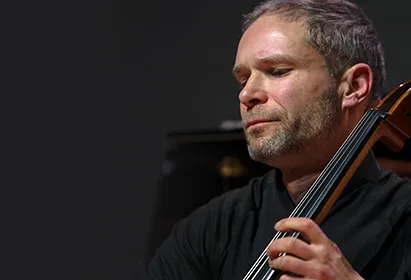
Following the Mozart was a new composer to me, Anna Clyne, with a contemporary cello work featuring the OSO’s own Martin Krátký. All orchestras today perform contemporary music, and all too often it seems something an audience must suffer through to get to the music they enjoy. Anna Clyne’s music is not like that. She seems to find a way to bridge modern, almost cinematic imagery in her sound, while respecting the origins of the orchestra. From the very first beautiful, slow crescendo into rich chords, all five movements of her piece DANCE drew in the listener, touching on abstract for moments, yet always musical. Through all of it, Martin Krátký led the dance, pushing his cello (and himself I imagine) to the limits. I was not aware that the instrument could produce some of the sounds he played, always with control, the interplay between himself and the conductor fascinating, both listening and watching, guiding the music together. The results were certainly a testament to his hard work and while there were a few moments his cello was overpowered by the orchestra, it was very much appreciated by the audience, many of whom stood at the conclusion, a well earned laudation.
The second half of the evening began with another Anna Clyne work, Restless Oceans. There were no words, no introduction, just the entire OSO stomping their feet to begin. The audience immediately settled, wondering at a piece which has the musicians stomping feet in time, singing while playing (some of the sung lines were not at all easy), and finishing dramatically with the orchestra standing and glaring at the audience as one, the ultimate punctuation to the piece. It was fun, and a very effective bit of showmanship.
Then, after pushing the crowd’s ears with contemporary, the familiar. Mozart’s Symphony No.40, always challenging and welcome, one of his rare symphonies in a minor key. The conductor did speak before this, bringing the listener in to her appreciation and understanding of Mozart. To me it’s a welcome addition and also gives the audience a breath between such disparate compositions. The approach taken with the movements felt lighter, the pacing expressive, working well with the smaller numbers. I did detect a few balance issues on occasion, but very minor, and, not being a Mozart expert, perhaps intended.
Maria Fuller is an excellent communicator. She breaks down the barrier between the orchestra, music and listener. This, to me, adds a great deal to how one experiences the music, especially with very modern compositions, which can often sound unreachable unless one understands the intent. Modern conductors are working hard to bring in new audiences with this approach and it works. There were a number of younger people in the theater, a very positive sign, and that can only improve.
I have had the privilege of performing with the OSO multiple times, but I confess, this was my first time as just an audience member. If this performance was indicative of the rest of the season, this will certainly not be my last time. For 66 years there has been an orchestra in this valley, not without struggle, something few cities can boast. With the new Music Director (Julian Pellicano) taking care of such dynamic programming, the OSO should be able to pull in new followers and continue providing the Okanagan with what many consider an essential cultural experience.